


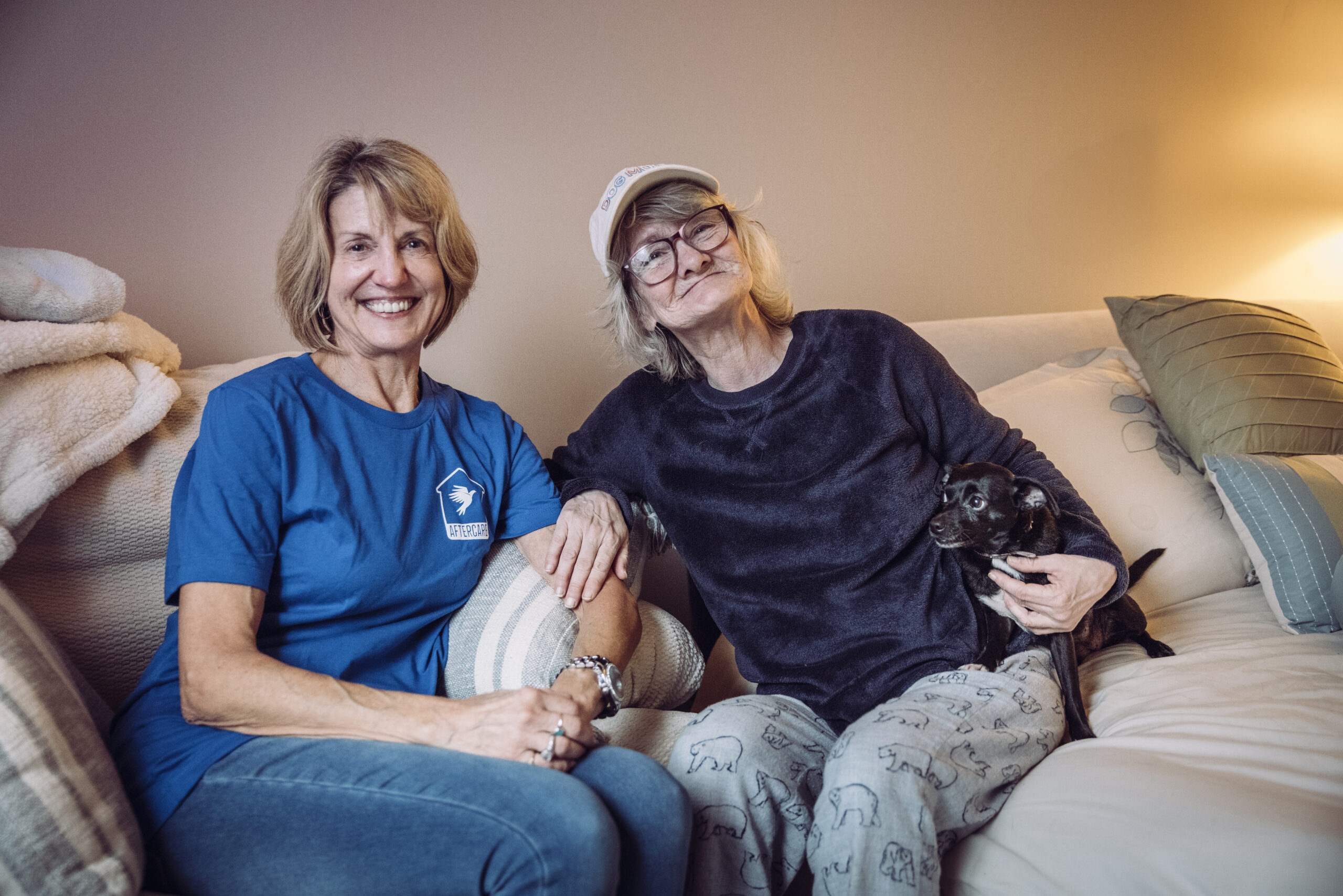
“My people will live in peaceful dwelling places, in secure homes, in undisturbed places of rest.”
Isaiah 32:18
Ending homelessness is not a one-time investment; it’s a long-term community effort. Although housing might get someone off the street, it’s companionship that helps people maintain stable housing and remember they are not alone.
Because KARM hopes for restoration, not just relocation.
That’s why Aftercare is a unique ministry. Instead of only focusing on emergency services, it is crafted to walk with individuals as they exit our shelter and begin rebuilding their lives. “If I go into work today, I get to help somebody exit homelessness,” said Drew, Aftercare Coordinator.
Exiting homelessness is just one part of Aftercare’s hope for participants. Chris, the Director of Aftercare, said:
“What does it mean for a person who moves out to have life more abundantly, right? One key measure is sustainability in housing. We want people to sustain housing, which many people that we serve have never experienced before, or have been greatly distanced from the experience of that in their past.”
Rebuilding a life isn’t easy, but it is possible. Aftercare continues to support our guests exiting homelessness through its five pillars: Basic Needs, Companionship, Church Engagement, Social Groups, and Advocacy. Let’s take a closer look!
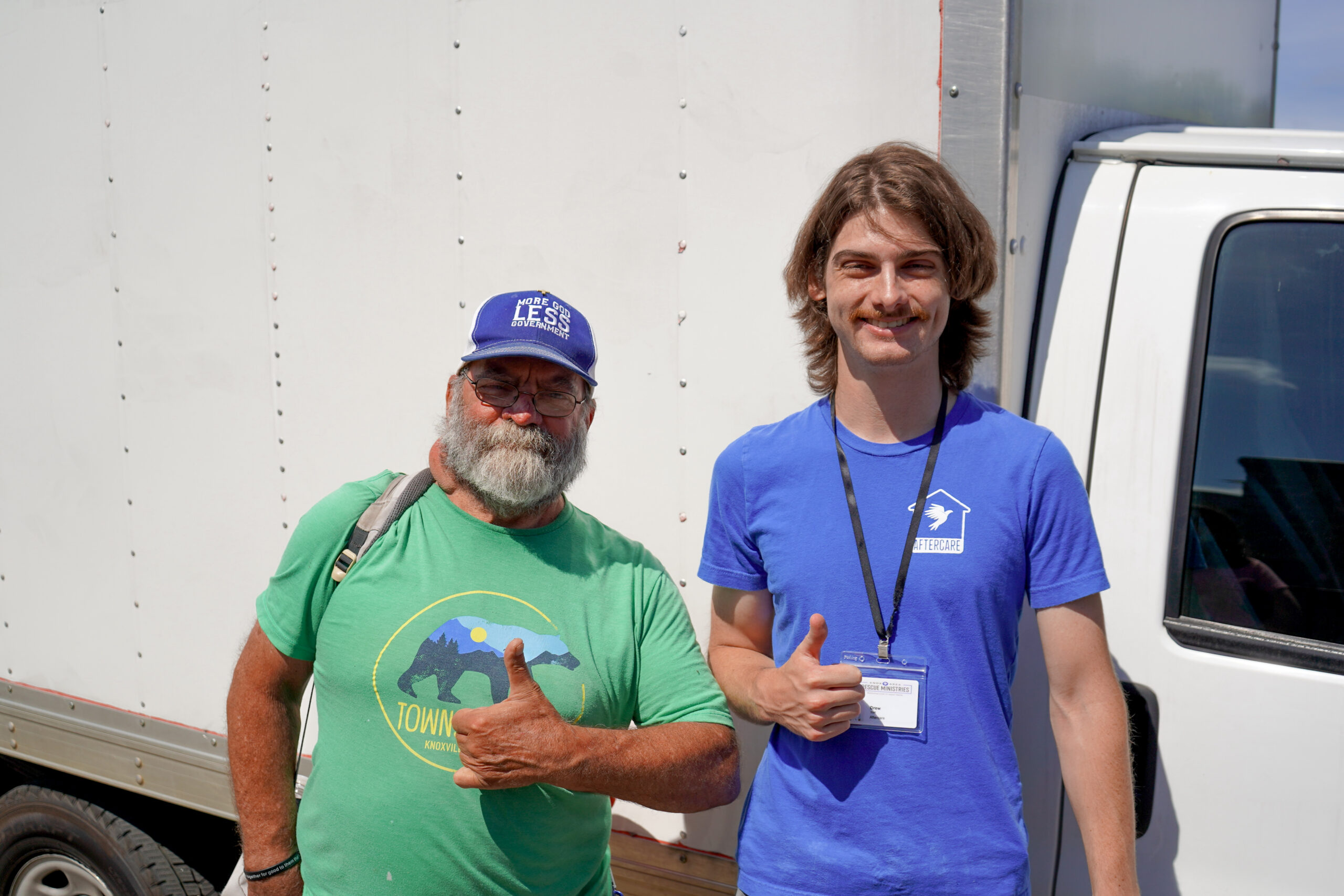
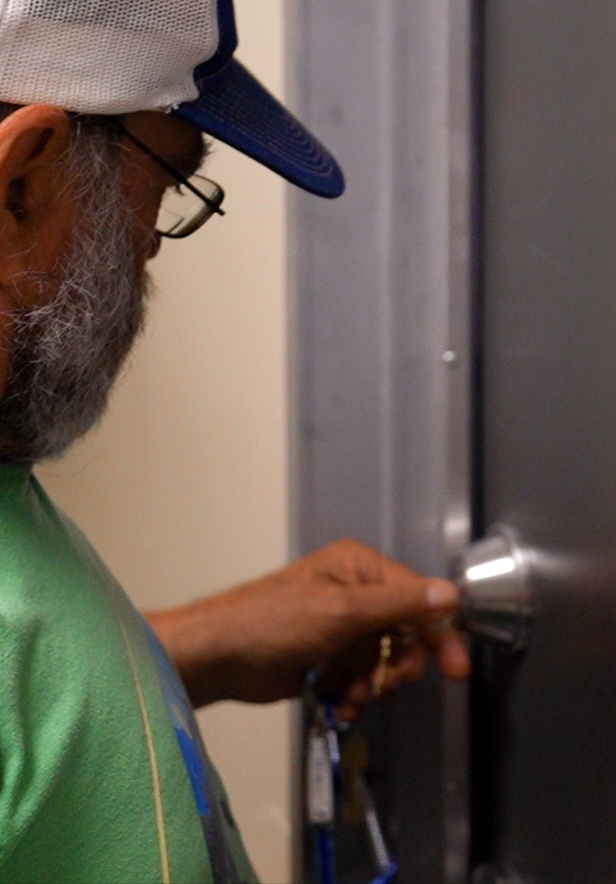
Basic Needs
Moving into a new place is always strange at first. All of your belongings are scattered across the place in boxes, with no clue where anything might be. Often your fridge is empty, and your wifi still has yet to be connected. For our guests, however, entering their home would look like walking into a bare apartment.
Aftercare saw that need and sought to meet it. For each participant, they recieve a welcome basket full of essentials such as bedding, laundry detergent, cleaning supplies, and a can opener. They also provide a brand-new mattress and bed frame. This helps participants settle into their new apartment with ease.
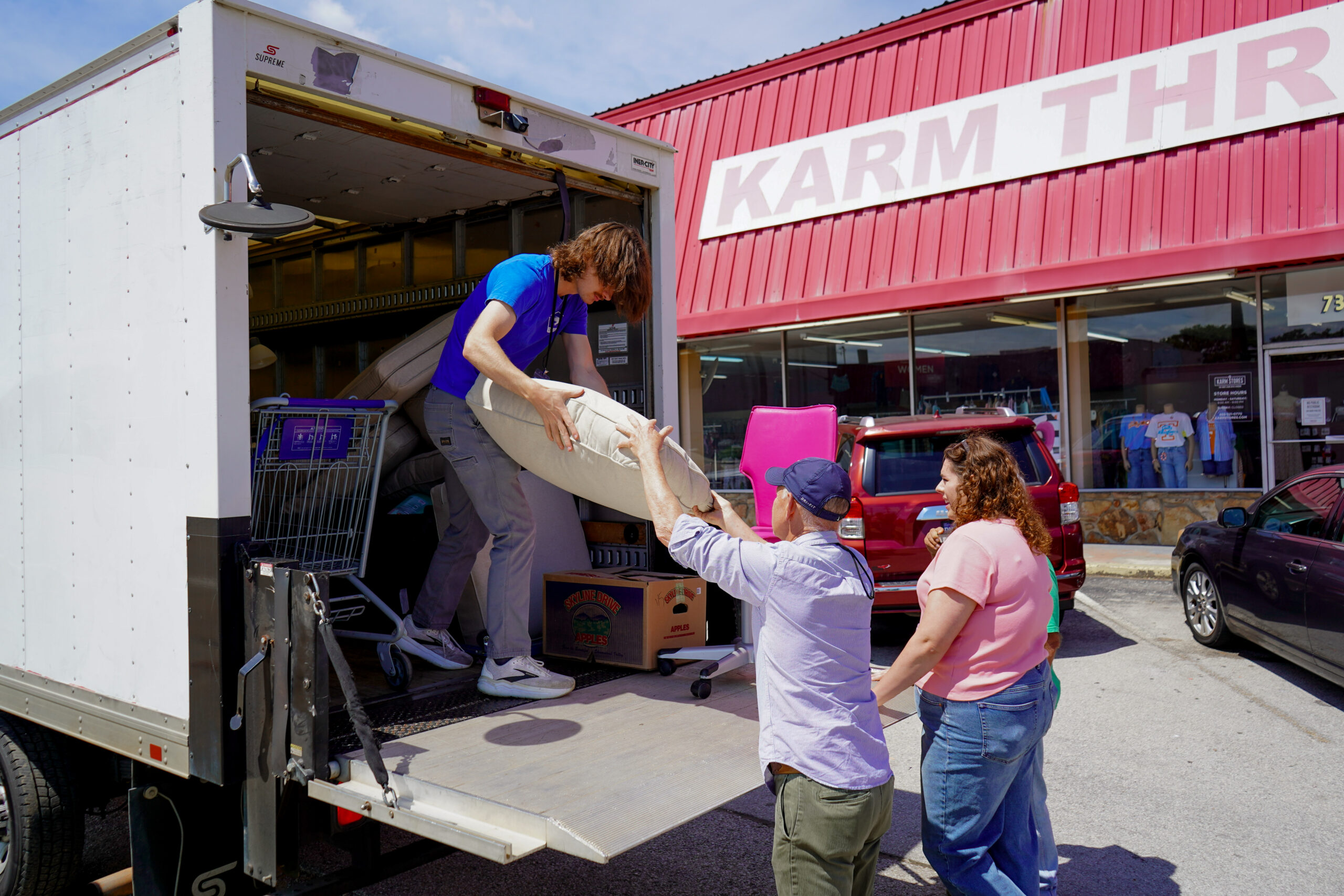
But their support doesn’t end there. Aftercare partners with KARM Thrift Stores, allowing guests to choose furniture and kitchen supplies for their new homes. Chris explained, “Part of the dignity in that is that you’re letting them make those kinds of choices.” Participants can fill their homes with items they choose so it feels more like their own.
I joined the Aftercare team as they helped move in a participant named John. The staff and I went to the KARM Store at Hall of Fame and walked around with John as he picked out furniture. Some of the items he chose were a couch, a lamp, as well as some kitchen supplies and dishes. But out of everything, he was most excited for a pan he could make meatloaf in.
As we were checking out, the KARM Store employee shared her joy in watching participants prepare for their new home. She said, “This is my favorite part of my job. I’ve been here for five years, and I love getting to do this.”
Companionship
Two are better than one, because they have a good return for their labor: If either of them falls down, one can help the other up. But pity anyone who falls and has no one to help them up. Ecclesiastes 4:9-10
Judge, Guest Transformation Coordinator, mentioned a guest who stayed in our New Life program. After graduating, Judge introduced the guest to a volunteer who had previously been a companion for Aftercare. During their initial meeting, the former guest was articulate and specific with his post-graduation plan, and the volunteer didn’t think he needed any more help. From all accounts, the guest seemed stable.
Sadly, the guest didn’t stay true to his plan; he isolated, and he relapsed because he tried to do it alone.
“Folks that we are struggling with are mostly folks that don’t have a volunteer [companion],” Terry, the Manager of Aftercare, added.
Transitioning into housing can be vulnerable for our guests. It’s a time of discovery and follow-through. They have to take what they learned at our shelter and then apply it to everyday life. That can be a lot to tackle at once.
That’s why Aftercare wants to ensure their participants have a strong presence in their lives to keep them moving forward. This is accomplished through dedicated volunteers who offer a steady friendship to those exiting homelessness. At its heart, it’s reminding someone they aren’t alone, lending a listening ear, and being there if they need help.
Judge made it clear that “you don’t have to have a whole lot of relationships, but I have found one significant relationship can make the difference for people becoming what we would call homeless no more.”
Church Engagement
One of the most important relationships we could ever help our guests develop is one with their Heavenly Father. KARM seeks to foster faith through classes, honest conversations, and prayer for everyone who enters our doors.
People come to KARM on unique faith journeys. Many have found faith here, and for that we praise God. Others continually choose to distance themselves from it.
As guests prepare to move into their new homes, Aftercare helps them navigate finding community; one way is through church engagement.
For those who want to get involved in church, Aftercare offers a list of local churches located in the area of their new home, ones that Aftercare has fostered relationships with.
But church engagement may not always look the way we expect. Drew explained, “there’s a good amount of people who wouldn’t be interested in an institutional church, but they still have faith; it just may not play out in the ways we think about going on a Sunday morning to some place.” Maybe living out a life of faith looks like reading scripture, watching online, or having a close friend to speak into their life.
Not every participant is interested in church or the Christian faith. Chris made it clear that, “you earn the right into being able to have that relationship where you can deliver Christ into a person’s life.”
The Aftercare team is very intentional with meeting people where they are, building connection, and sharing truth along the way. Chris continued, “There’s a warming up over time to those kinds of things; it doesn’t have to be accomplished in one day. It can be a slow kind of progressive thing.”
Social Groups
Terry explained that “one of the problems that drove people back to homelessness in the past has been moving into an apartment, and after being 12 or 18 months here with 300 people around them, there’s suddenly nobody around them.”
Finding housing shouldn’t mean living in isolation, but building community can be difficult. Community doesn’t always find us; sometimes we have to seek it out.
For participants, this can be another challenge. How do you seek out community when you don’t know where to look—or how to begin? Not to mention, transportation is a real barrier that can stand in the way. These are true limitations, not excuses. So what can be done?
Aftercare found a way to bring community directly to the apartment complexes through social groups. Every two weeks, Aftercare and church partners visit housing complexes with snacks, activities, or lessons with an invitation for residents to join.
These gatherings create opportunities for relationships to grow while continuing the support of companions and staff. Terry explained that:
“These social groups at the apartment complexes around are not just former KARM guests. They’re a mixture of all residents, and the idea is that folks who come from KARM are just like anybody else, and there’s no difference in us. They shouldn’t be labeled by that. They should be like anybody, any other neighbor you meet in the community.”
When I attended one of the social groups, I could see community blooming before my eyes. Two Rivers Church hosted a class for attendees on the importance of drinking water and hydrating. A grad student named Carly, a regular volunteer, came to hand out snacks and make people feel welcome. At one point, a resident stumbled upon our group, and when the event ended, the individual expressed gratitude and a desire to return for the next meeting.
This is what building a community looks like.

Advocacy
Chris compared advocacy for participants to his daughter’s experience when she began community college. As she grew up, Chris’ wife handled scheduling their daughter’s doctor appointments. After graduation, they began to encourage and ease her into taking on those responsibilities.
At first, she was nervous and uncomfortable, and even fought it for a time. But there were small steps she took that helped her gain more confidence. This paints a beautiful picture of what that transition can look like for participants exiting homelessness.
Terry mentioned, “when people are here [at KARM], we’re telling them when to eat, when to go to bed, when to shower, when to go to class… But when they get out there, they have to begin developing a structure on their own, and… when they haven’t had any help with that, they have floundered and failed and returned to homelessness.”
Aftercare takes extra care to provide resources, eviction prevention, and life skills training to help participants develop self-advocacy. The goal is for our former guests to step into society confident and prepared.
By restoring one life, we impact a community. That’s why Aftercare is essential to our mission to see our homeless neighbors in the Knox area find hope, healing, and restoration.
Missed our First Look Into Housing? Check it out here.
Highlights
1. I mentioned earlier that the people who seem to struggle the most with transitioning after leaving KARM are those who do not have a companion to walk alongside them. What I found interesting is how Terry mentioned that yes, our guests need a companion, but it doesn’t happen overnight. For those who do have a volunteer, there is a get-to-know-you phase for about three to six months, and that can be rocky. But past that six-month mark, relationships can thrive, and those individuals turn out to be successful in the program. Terry believes the glue is consistency. Someone choosing to show up, whether that’s sharing a meal, doing an activity, or simply coming to visit. A steadfast presence in someone’s life can have remarkable effects.
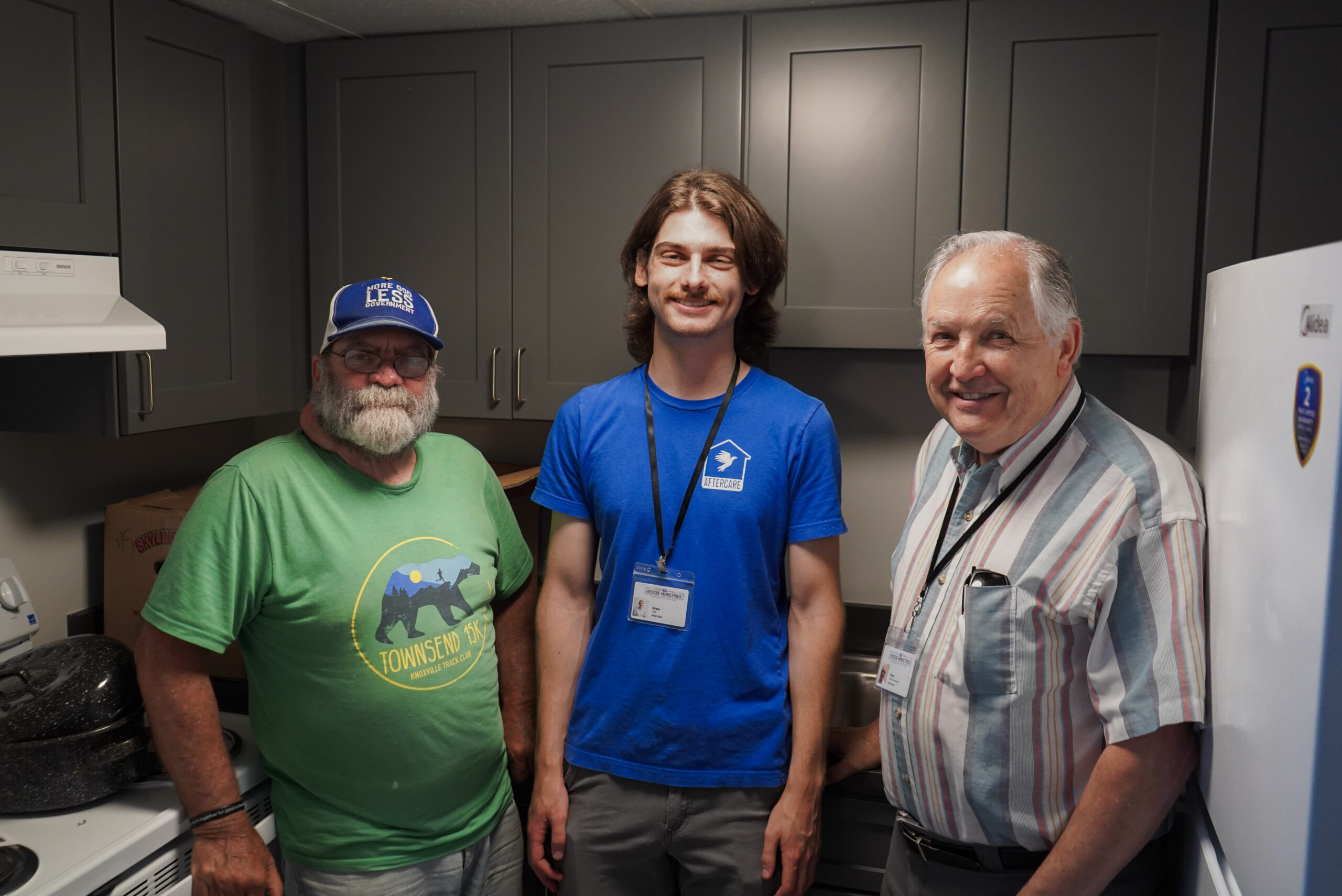
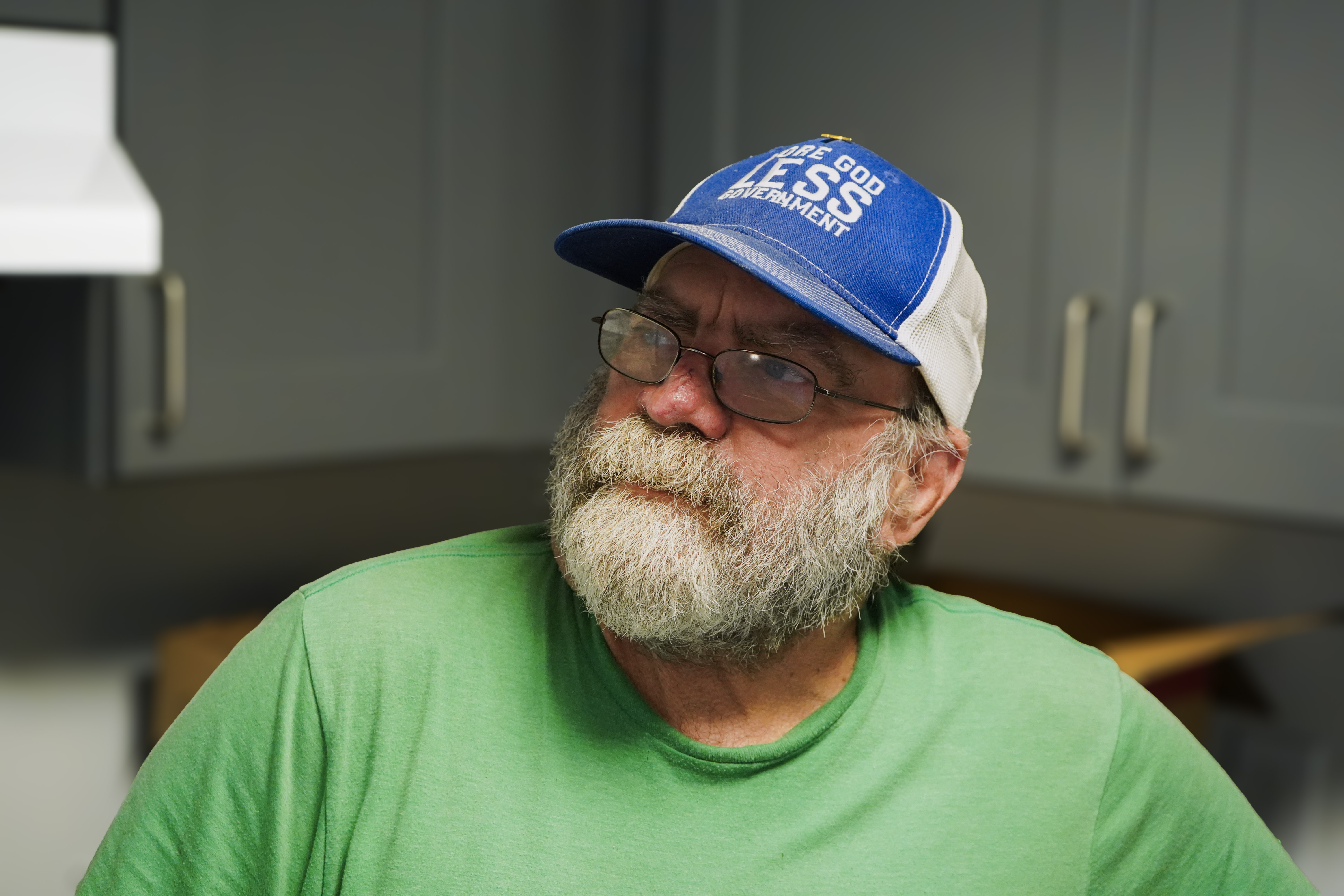
2. You might see all of the photos on this page. This was from the move-in I joined with John. I actually loved getting to tag along and watch Aftercare work its magic. Would you join me in praying for our friend John? Pray for him to engage in community and live a life that is abundant! And pray for others who will come through the program after him, making the same journey he has.
Did You Know
187 people were housed in 2025! The goal is to have 200 housed by December this year!
You can be a part of helping our guests move into their new homes and be a friend as they continue their journey of exiting homelessness!
Aftercare has three volunteer opportunities
- Movers– Helping guests move their items into their new apartment
- Companions- Walk alongside participants by keeping in contact and spending time with them.
- Community Groups- Participate in leading a lesson or activity at a variety of housing environments
To volunteer, you can go here, or you can email Mark Roberts, mroberts@karm.org, for a tour to learn more.

By: Laura Lee Cochran; Marketing and Copy Coordinator
This post is a part of our First Look article series. Its goal is to give you a first look experience into volunteering at KARM while highlighting our many programs.


A First Look Into Volunteering at KARM: Dorm Edition
Volunteering in the Women's Dorm Welcome to our First Look Experience into volunteering with KARM! For those who don’t know me, I’m Laura Lee. I am [...]